11 Yoga Poses for Better Sleep at Night: Restorative Routine


When your mind is still active at bedtime, a slow yoga practice can create a clear shift in pace. This restorative routine focuses on long holds, easy breath, and supported floor poses. If you are asking which yoga poses help you sleep better at night, the aim is not intensity. It is a calmer transition from the day into rest. By the end of this guide, you will have an 11-pose bedtime sequence, a beginner-friendly starter option, and practical tips for building a consistent sleep routine.
Yoga for sleep uses breath-linked movement and stillness to guide the body toward rest. Gentle shapes may support parasympathetic nervous system activity, which is linked with a calmer state. This can also support stress relief yoga by reducing the sense of physical and mental urgency carried from the day.
Slow breathing gives each pose a steady rhythm. Long exhalations and relaxed muscles can signal that it is safe to soften. Restorative yoga poses also remove the pressure to perform. The practice becomes less about range of motion and more about noticing tension. Research into mind-body practices suggests that regular slow breathing during yoga may help lower cortisol levels, which are associated with alertness and stress. Over time, a consistent bedtime yoga practice may help the body recognise the routine as a cue for sleep, making the transition from wakefulness to rest feel more natural.
Yoga for anxiety may be useful when racing thoughts make it hard to settle. Insomnia yoga may also help people build a quieter pre-sleep ritual. Yoga is a complementary practice, not a cure for ongoing sleep concerns. Speak with a qualified health professional if sleep problems persist.
Choose a quiet, dim space with enough room to lie down. Wear clothes that do not restrict your breath. Keep a folded blanket, cushion, or pillow nearby for support. Practice during a calm window before bed, rather than when you feel rushed.
Keep the room comfortable and reduce distractions where possible. Your bed can work for some poses, though a stable floor may feel easier for twists and hip openers. Stop if a pose causes pain, numbness, or dizziness.
Insight Corner: Slower Is Smarter at Bedtime
Bedtime yoga should feel slower than daytime exercise. Use props, shorten a hold, or skip a pose when your body asks for less.
This bedtime yoga routine moves from a folded position into reclined floor poses, then ends in stillness. Move gently between each shape. Spend a few relaxed breaths in shorter poses and longer when a pose feels comfortable. The full sequence may take as long as you need, depending on your holds and transitions.
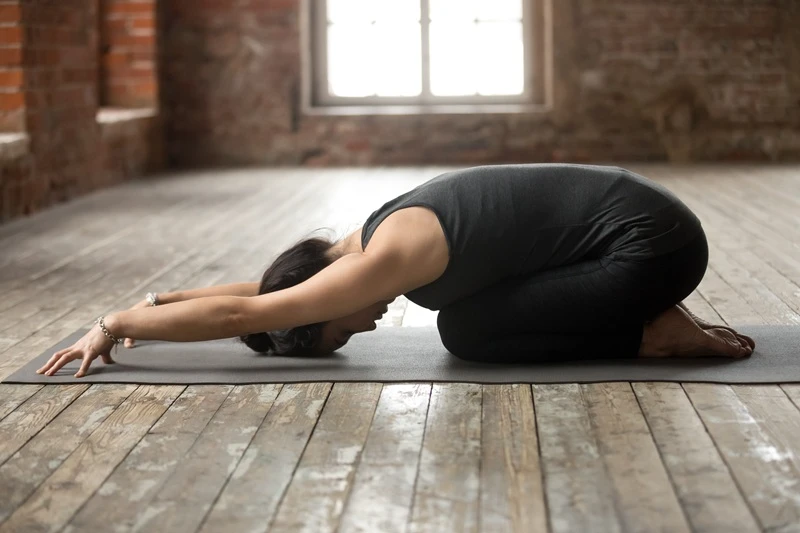
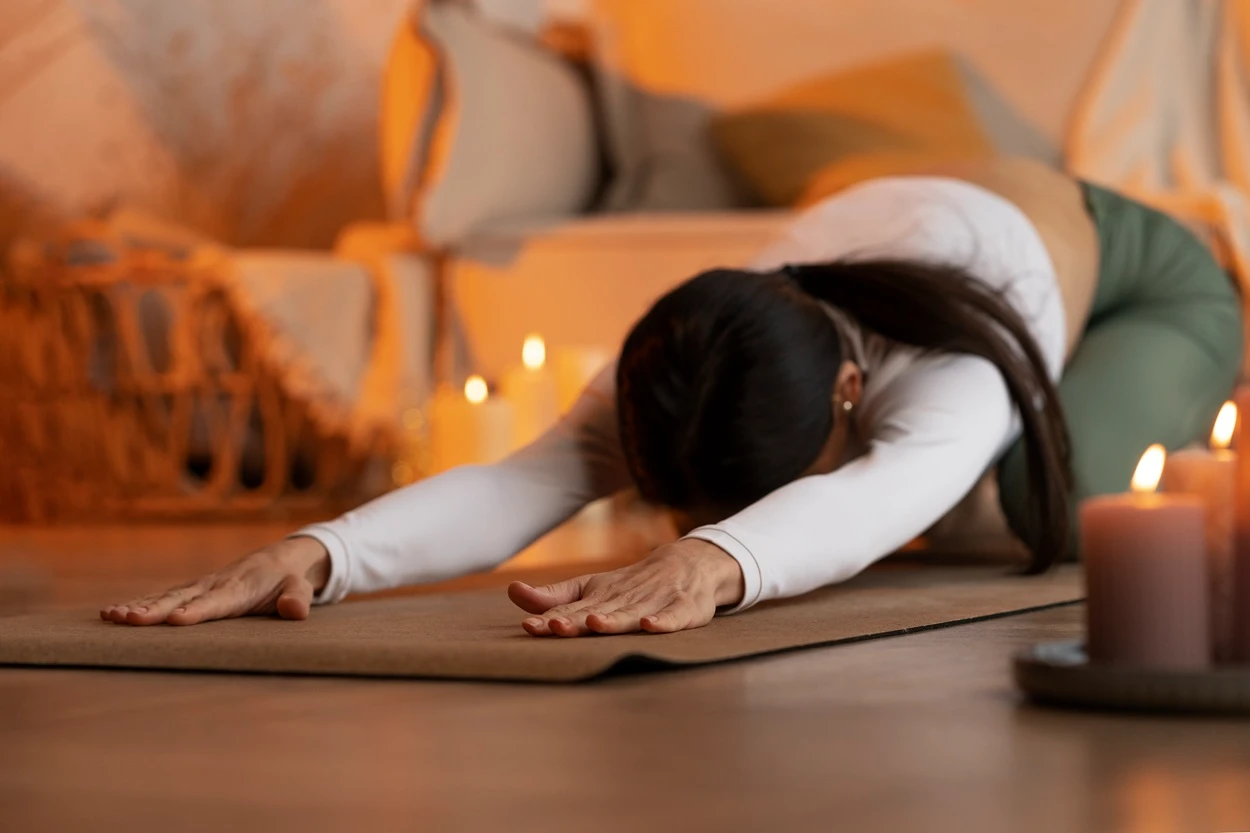
Begin on your knees and fold your torso forward. Rest your forehead on the floor, a cushion, or stacked hands. Let your arms reach forward or rest beside your body. Child's Pose can create a contained, restful shape and may help you notice tightness through the back, hips, and shoulders.
Stay for several slow breaths. Keep space between your hips and heels with a blanket if needed.
Sit beside a wall, then turn to lie down as you bring your legs upward. Let your arms rest comfortably by your sides. This gentle inversion changes the usual direction of your body and encourages you to be still. Keep a small bend in the knees if straight legs feel strained.
Use this pose as a pause from standing, walking, and sitting. Focus on an unforced breath.
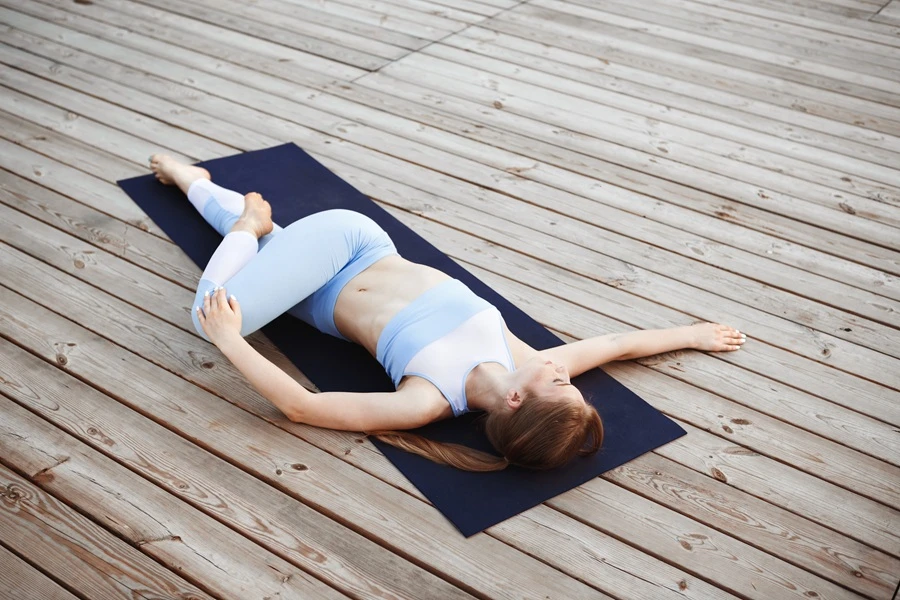
Lie on your back and draw your knees toward your chest. Let both knees fall slowly to one side while your shoulders stay heavy. Turn your head only if it feels easy. This twist can offer a gentle sense of release through the back and waist.
Support the knees with a pillow if they do not reach the floor. Repeat on the other side without forcing depth.
Yin-style poses use stillness and longer, comfortable holds. The goal is not to push into a stretch. Enter each shape slowly, find a sustainable edge, and allow the breath to stay soft.
Sit with one leg bent beside you and the other leg extended or bent comfortably. Lean back only as far as your knees and hips allow. This position can bring attention to the front of the thigh and hip flexor area, where some people hold tension after long periods of sitting.
Add cushions behind your back to keep the pose gentle.
From a seated position, arrange both legs in a relaxed, bent shape and fold forward slightly. The exact leg position can vary. Keep the entry easy and avoid forcing the hips downward. Sleeping Deer is a quiet hip-opening pose that suits a slower wind-down practice.
Lie on your back and cross one ankle over the opposite thigh. Stay here, or draw the lower leg toward you. This pose can bring a mild stretch to the outer hip, piriformis area, and lower back. If your hips feel tight, keep the lower foot on the floor.
Lie on your back, bring the soles of your feet together, and let your knees open outward. Place cushions under each thigh if needed. Sleeping Butterfly offers a supported opening through the inner groin and hips while keeping the body close to the floor.
This pose can be practiced by people of any gender. Individual anatomy, hip comfort, and flexibility differ more than gender alone. It is worth noting that hip-opening poses like Sleeping Butterfly may feel different across body types due to natural variation in hip socket depth, pelvic angle, and soft tissue flexibility. Use comfort and support as your guide rather than trying to match a fixed shape.
These poses use a gentle forward shape, but they create different sensations. Keep both calm. Neither should feel like a demanding stretch.
Choose a seated fold for a lower-intensity option. Lengthen your spine first, then hinge forward with bent knees if needed. Let your head and jaw soften. A forward fold can release the hamstrings while giving your attention a simple breath cue: inhale softly, then exhale without strain.
From hands and knees, walk your hands forward while keeping your hips above your knees. Rest your forehead on the floor or a prop. Unlike Child's Pose, Puppy Pose keeps the hips lifted and may create more space across the chest and shoulders. Keep the arms closer if your shoulders feel sensitive.
For Cat Pulling Its Tail, take a comfortable side-lying position and gently reach toward the upper foot or ankle only if it is accessible. Keep the pose mild. It can offer a quiet stretch through the front of the thigh and side body.
Finish with Corpse Pose, or Savasana. Lie on your back with your legs and arms relaxed. Use a pillow under your knees or cover yourself with a blanket. Stay still and let this final pose become your transition toward sleep.
Consistency matters more than completing every pose. Begin with a few familiar shapes on most evenings. Over time, notice which positions help you slow down and which feel too active before bed. Keep your routine flexible when travel, work, or social plans change your schedule. It can also help to practice at the same time each evening, as a regular schedule may reinforce the body's natural wind-down signals. Even a short session of ten to fifteen minutes can be enough to shift your state from alert to settled.
Try Child's Pose, Legs Up the Wall, and Savasana. These three yoga poses for better sleep offer a simple path from gentle folding to supported rest. Hold each only as long as it remains comfortable.
Pair bedtime yoga stretches with natural, steady breathing. Avoid holding your breath or trying to control it too much. A soft inhale and unhurried exhale can help keep the practice calm.
Sleep aid yoga is a non-pharmacological practice that can complement a wider sleep routine. It does not work like a medicine, and its effects may vary from night to night. Yoga for deep relaxation focuses on settling the body in the moment. Insomnia yoga can be part of a regular routine for people who want a calmer bedtime pattern.
Avoid turning gentle yoga for sleep into a workout. Fast flows, intense backbends, and forceful stretches may feel too stimulating at night. Another common mistake is skipping support. A blanket or pillow can make restorative poses more sustainable. Finally, do not chase a fixed hold time. Leave a pose when comfort fades.
Child's Pose, Legs Up the Wall, Supine Spinal Twist, Sleeping Butterfly, Eye of the Needle, and Savasana are restorative options in this sequence. Props can make each pose feel more supported.
Mudras are hand gestures used in some yoga traditions, but there is no single mudra universally confirmed to improve sleep. Focusing on breath and restorative poses is a more evidence-supported approach for a calming bedtime practice.
A regular practice may help you become more familiar with your stress patterns and preferred relaxation cues. Results vary, and there is no guaranteed sleep outcome or fixed timeline.
Neuropathy needs individual medical guidance. This article does not provide a treatment plan for nerve symptoms. Ask a qualified clinician which movements are appropriate for your needs.
The most useful sleep yoga poses are often the simplest ones: supported folds, gentle twists, easy hip openers, and a final period of rest. Build your routine around comfort, steady breath, and repetition. Wellbeing Nutrition supports everyday wellbeing with superior ingredients, highly absorbable formats, palatable flavors, alongside mindful habits such as a calm bedtime routine.




Someone sent you


